FT Survey Finds Cracks Forming in $10 Trillion AI Buildout
Financial Times reporting points to physical-world constraints — power, land, hardware supply — colliding with the scale of planned AI data center spending.
The Financial Times reports that the roughly $10 trillion bet on AI infrastructure is running into the practical limits of electricity supply, land and physical build-out speed.
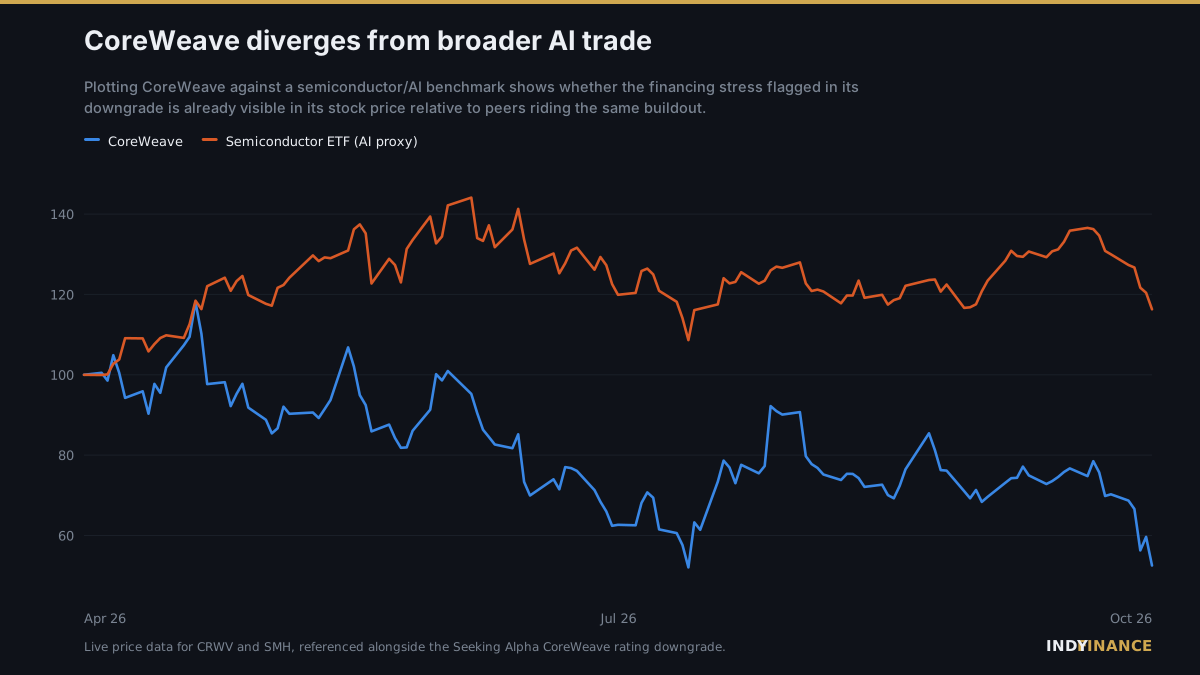
CoreWeave diverges from broader AI trade
Plotting CoreWeave against a semiconductor/AI benchmark shows whether the financing stress flagged in its downgrade is already visible in its stock price relative to peers riding the same buildout.
Live price data for CRWV and SMH, referenced alongside the Seeking Alpha CoreWeave rating downgrade.
Use this chart
Free to embed with attribution:
<figure><a href="https://www.indy.finance/news/ft-survey-finds-cracks-forming-in-10-trillion-ai-buildout"><img src="https://www.indy.finance/news/ft-survey-finds-cracks-forming-in-10-trillion-ai-buildout/graphic.svg" alt="CoreWeave diverges from broader AI trade" width="1200" height="675"></a><figcaption>CoreWeave diverges from broader AI trade — <a href="https://www.indy.finance/news/ft-survey-finds-cracks-forming-in-10-trillion-ai-buildout">Indy Finance</a></figcaption></figure>If major hyperscalers report in coming quarterly earnings that data center capex guidance is being raised rather than trimmed, it would undercut the fraying-boom framing.
- Seeking Alpha — All ArticlesCoreWeave Can Survive But Shareholders Could Still Lose (Rating Downgrade)External ↗
Produced automatically by the INDY NEWS Desk from the public wire sources cited above, and checked against them before publication. Market commentary, not investment advice.