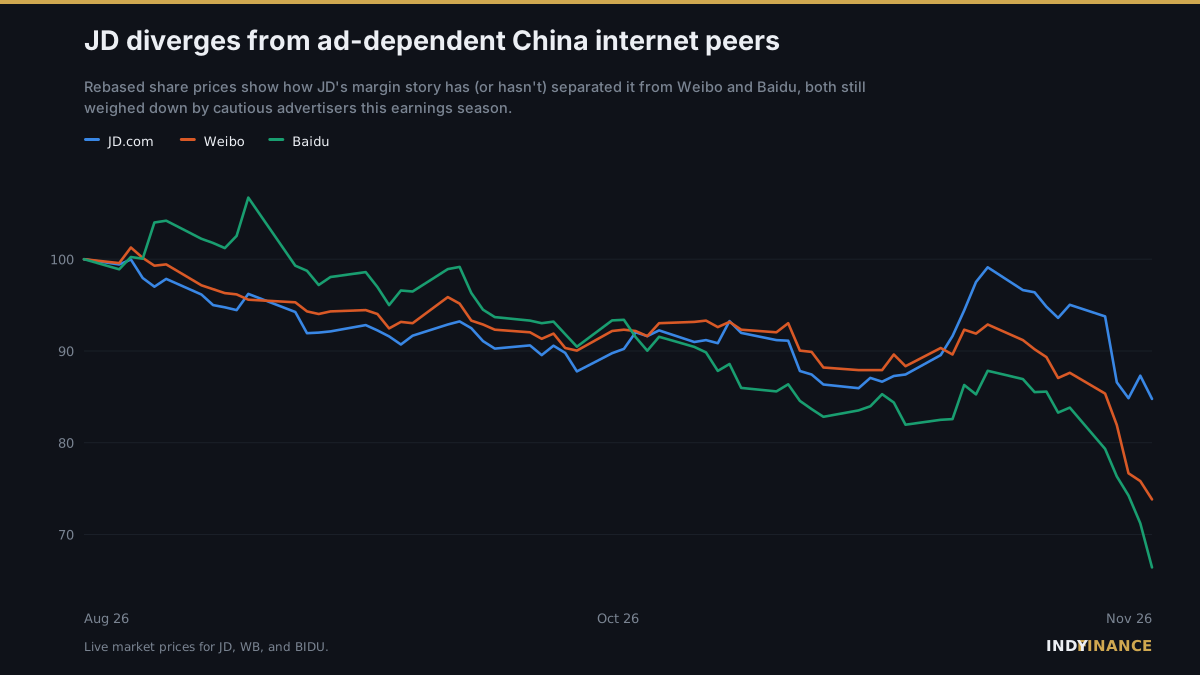
JD.com's third-quarter 2026 earnings call showed retail gross margin crossing 20% for the first time, with losses at its newer business lines narrowing sharply. That is a logistics-and-scale story: JD's core retail and delivery operations are getting more efficient as the unit grows.
The contrast with two other China internet earnings this week is stark. Weibo's call described advertisers as still cautious, even as creator onboarding and new AI ad tools gained ground — meaning the platform is adding tools faster than it is adding ad dollars. Separately, US Tiger Securities cut its price target on Baidu, citing ad weakness directly.
The split matters because it tells readers where in China's internet economy demand is actually showing up. JD's margin gain comes from operational efficiency in a business that sells physical goods, not from advertiser spending. Weibo and Baidu depend on the same advertisers pulling back, and neither is immune to a soft ad market.
What's unresolved is whether JD's margin gain can hold if China's broader advertising pullback eventually bleeds into consumer spending on the goods JD sells. For now, the two trends — one in logistics, one in advertising — are moving in opposite directions within the same reporting week.