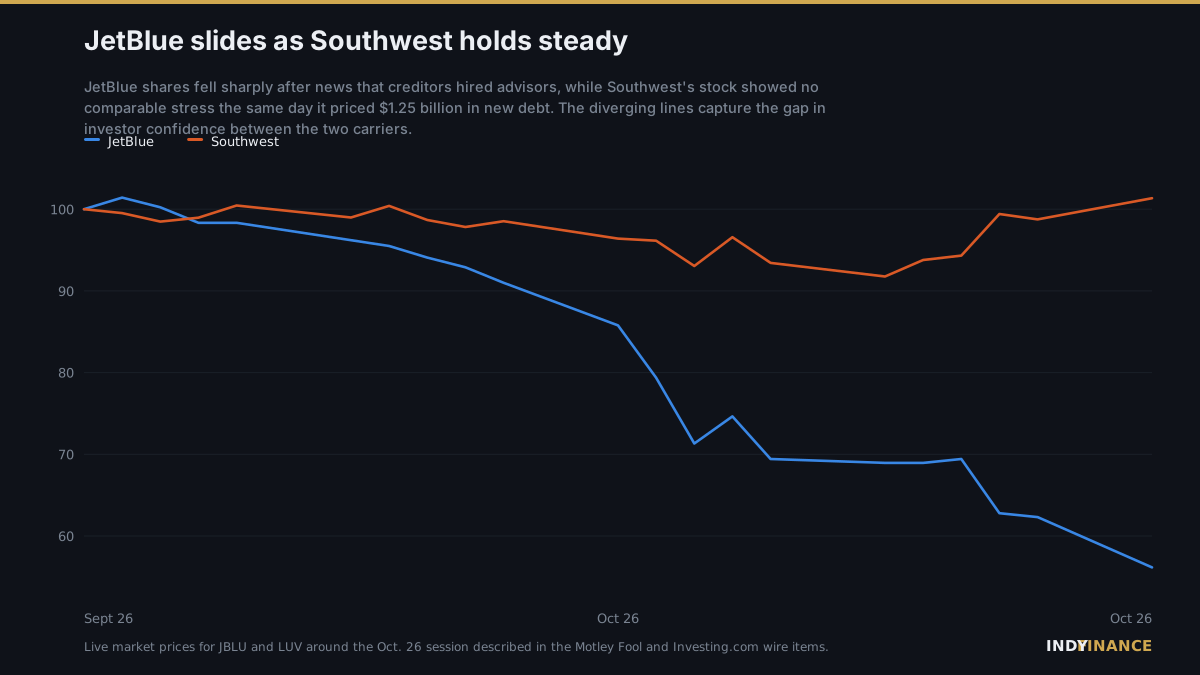
JetBlue stock dropped nearly 10% in Monday's Oct. 26 session after a media report said a group of the airline's creditors had retained financial and legal advisors. Companies and their lenders usually only bring in that kind of outside help when they expect to negotiate over debt terms, which is why the market read it as a distress signal rather than routine housekeeping.
The timing makes the move more notable. On the same day, Southwest Airlines priced a $1.25 billion senior notes offering, a sign that at least one major U.S. carrier still has easy access to the debt market on ordinary terms. JetBlue's situation looks different: creditors organizing advisors suggests they see enough risk in the airline's balance sheet to prepare for a negotiation, not just collect a coupon.
Neither JetBlue nor the creditor group has confirmed what, if anything, is being discussed. The report did not specify whether the advisors are preparing for a refinancing, a covenant renegotiation, or something more severe. Until JetBlue addresses the report directly, the size of the problem — and whether it is a liquidity issue or something structural — remains unclear.