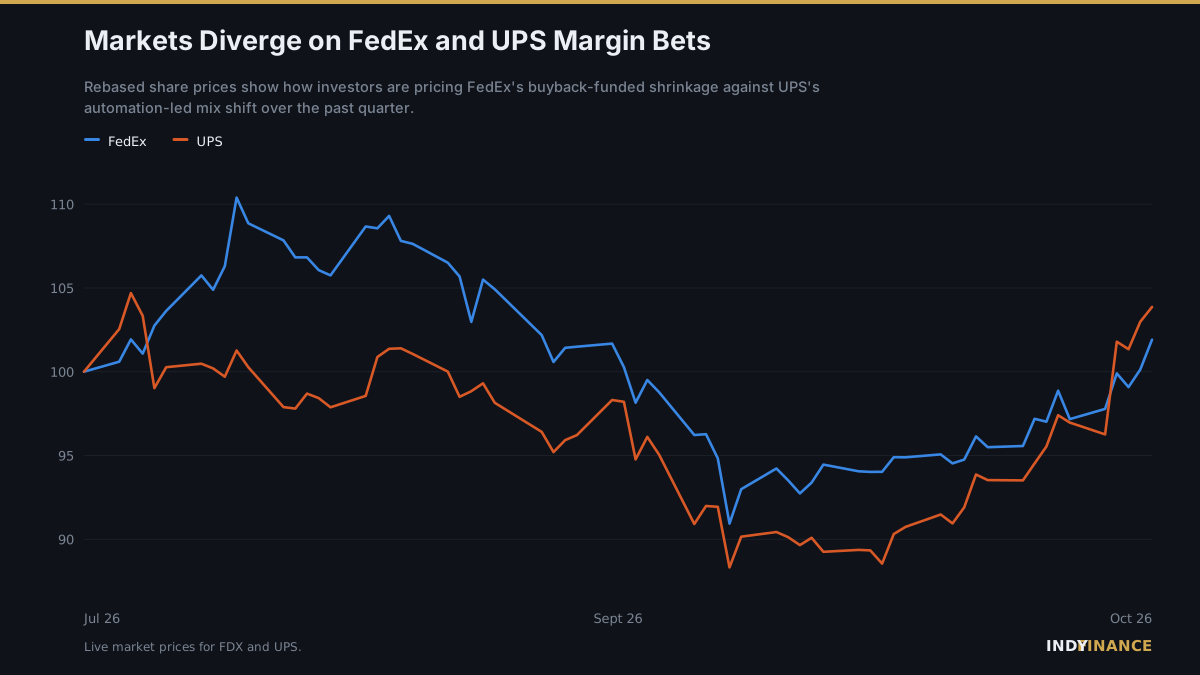
Two reports on the same day, about the two biggest US parcel carriers, describe two different paths to the same destination: wider margins without much help from volume. FedEx is shedding low-margin freight and accelerating share buybacks as cost cuts free up cash, a strategy that trades top-line growth for profitability. UPS is taking a different route, using automated sorting hubs and a shift toward higher-margin customers to expand margins faster than its package volume is growing.
The mechanism matters because it tells you what each company is betting on. FedEx's approach depends on discipline holding even as it walks away from revenue — if the volume it sheds turns out to matter more than it thinks, the buybacks won't offset the lost scale. UPS's bet is that automation and customer mix can do the heavy lifting that volume used to do, which only works if the investment in sorting technology keeps paying off as promised.
Both stories surface in a package-delivery sector where overall volume growth has been sluggish industry-wide, which is precisely why the margin story matters more than the revenue story for investors in both names right now. Neither company is claiming demand is accelerating. They're each explaining how to make money without it.
What's unresolved is durability. Cost cuts and buybacks can flatter earnings for a few quarters without changing the underlying freight economics; automation capex has to clear a payback period before it shows up as sustained margin. The next two or three quarters of margin data from each company, not this quarter's headline numbers, will show which approach actually holds up.