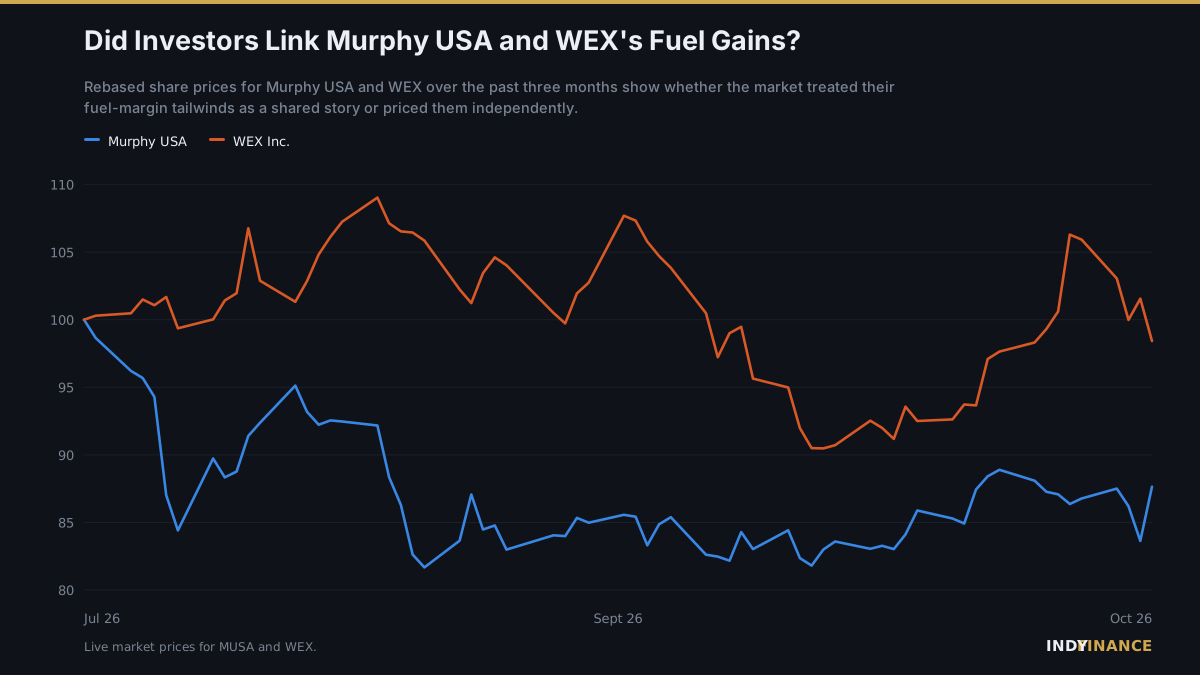
Murphy USA, which operates fuel and convenience stores, reported net income surged to $176 million in the third quarter of 2026 as fuel margins and supply performance strengthened. On the same earnings calendar, WEX, which processes fuel payments for commercial fleets rather than selling fuel directly, said fuel tailwinds helped push its adjusted earnings per share up 33.6% year over year, with organic revenue growth of 4.4%.
The two companies don't compete with each other, but their results both trace back to the same mechanism: wider spreads between wholesale and retail fuel prices. For Murphy USA, that spread shows up directly in the margin on every gallon sold at the pump. For WEX, it shows up indirectly, since fuel price volatility and higher per-gallon transaction values can boost the fees it collects on fleet fuel cards.
What the two transcripts don't resolve is how durable the margin widening is. Fuel margins are typically volatile and tied to refining capacity and crude price swings rather than steady demand growth, which means a quarter of strength at both companies doesn't guarantee the trend continues into the next one.