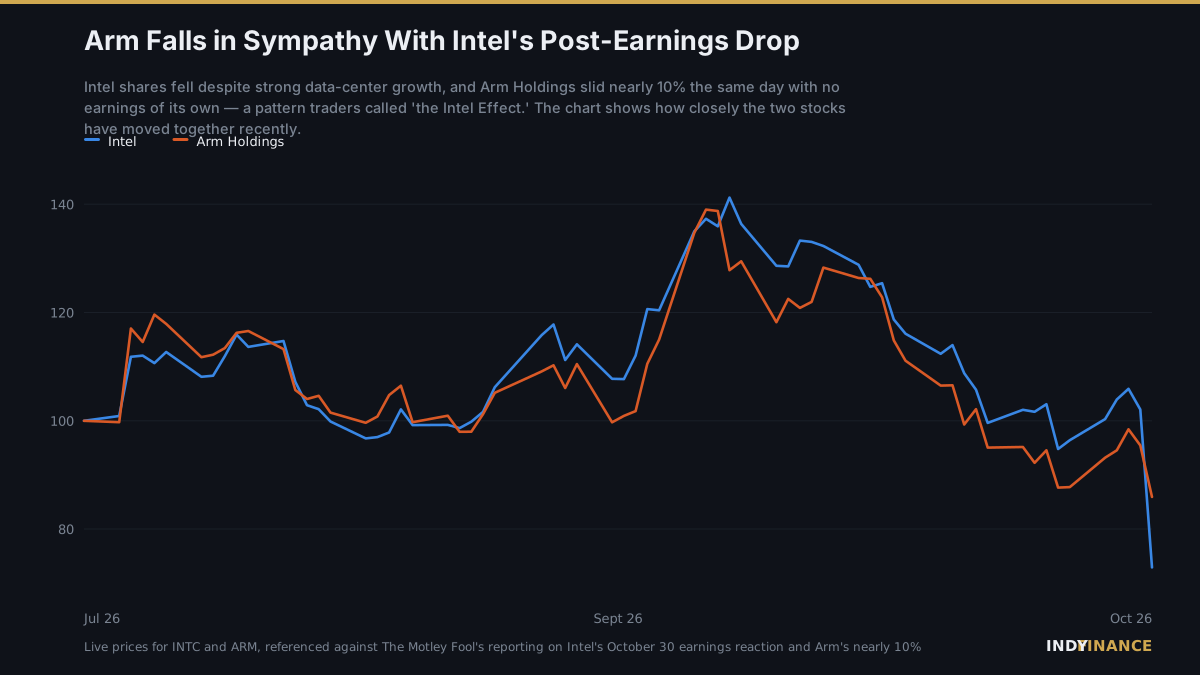
Intel shares fell in the session ending October 30 even though the company's data-center chip business grew at its fastest pace in 15 years. The drop shows investors reacting to something other than that headline number — likely margins, guidance, or capital spending plans that the earnings release did not resolve in Intel's favor.
Arm Holdings had no earnings of its own that day, yet its stock plummeted by nearly 10%. Commentary described this as "the Intel Effect": a chip-sector selloff triggered by one company's results spreading to a supplier whose royalty business is tied to the same customers and the same AI capital-spending cycle. When the biggest name in the group stumbles despite good underlying numbers, the market reads it as a signal about the whole group's spending plans, not just one firm's quarter.
The move landed on a day MarketWatch was already drawing a line between the Nasdaq's "rough ride" and the final months of the 2000 dot-com bubble. The comparison is about sentiment, not fundamentals: strong reported growth across the chip sector is no longer enough to support stock prices if investors start doubting whether AI capital spending can keep paying for itself.
What remains unresolved is whether Friday's reaction was a one-day risk-off move or the start of a repricing of AI infrastructure spending broadly. Intel's actual guidance commentary — not yet detailed in available reporting — will matter more than the data-center growth figure investors shrugged off.