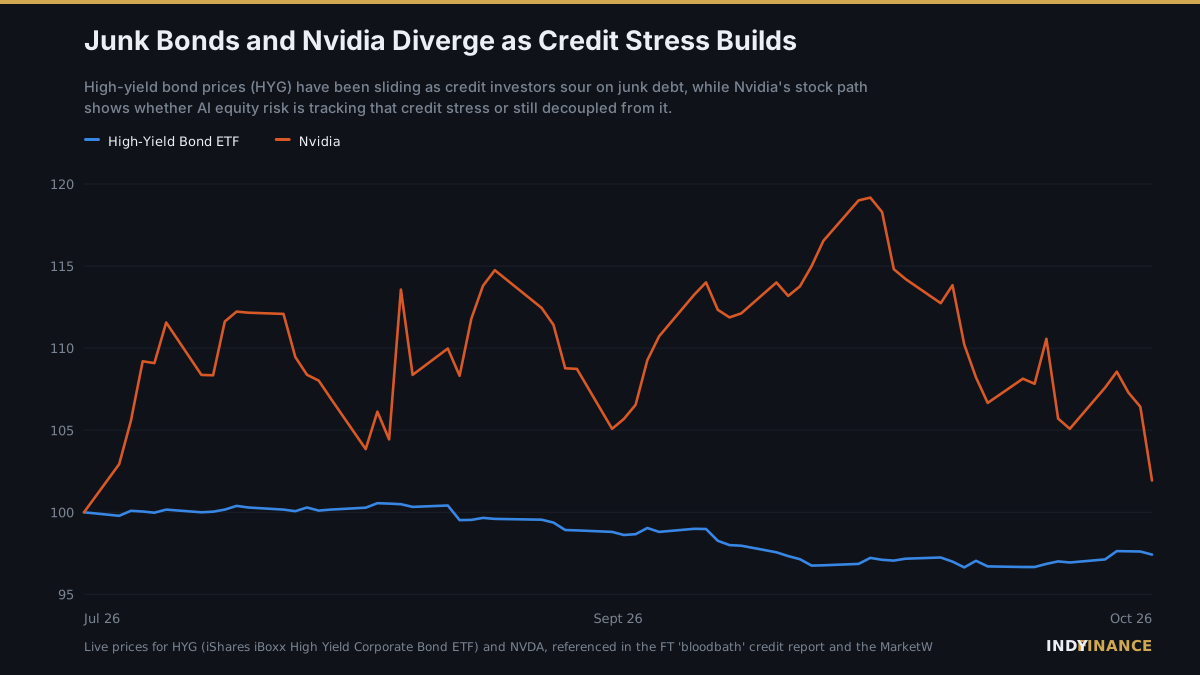
The Financial Times reported a rout in high-yield, or 'junk,' bonds severe enough that credit investors are calling it a bloodbath, pointing to aggressive moves by some borrowers to shift assets out of creditors' reach as one accelerant. That is a story about corporate debt markets, not about technology stocks. But a separate analysis argues the two are now connected: the AI buildout, which runs on enormous debt-financed spending on data centers and chips, is exposed to the same credit conditions that are souring in the junk bond market.
The mechanism is straightforward. Companies building AI infrastructure have leaned on debt financing to fund data centers at a scale that outpaces their current cash flow. If credit gets more expensive or harder to roll over, that financing model gets tested, independent of whether AI products themselves are working or not. A separate piece framed this as the biggest threat to the AI-powered bull market, arguing that blockbuster earnings growth carried the market higher through 2026, but that engine may stall in 2027 if the credit backdrop keeps deteriorating alongside it.
The debate is not settled. One commentary dismissed the loudest version of this fear outright, mocking the idea that the market's fate rides entirely on a single Nvidia earnings report, and another argued the broader AI-bubble-burst narrative is overstated. Those pushbacks matter: the credit-to-AI-equity connection is an emerging thesis, not a confirmed mechanism, and none of the sources quantify how much AI-linked debt is actually exposed to the junk bond stress.
What is unresolved is the size of the overlap. No source here puts a dollar figure on how much AI infrastructure debt sits in the distressed part of the junk bond market, which is the number that would turn this from a plausible narrative into a measurable risk.