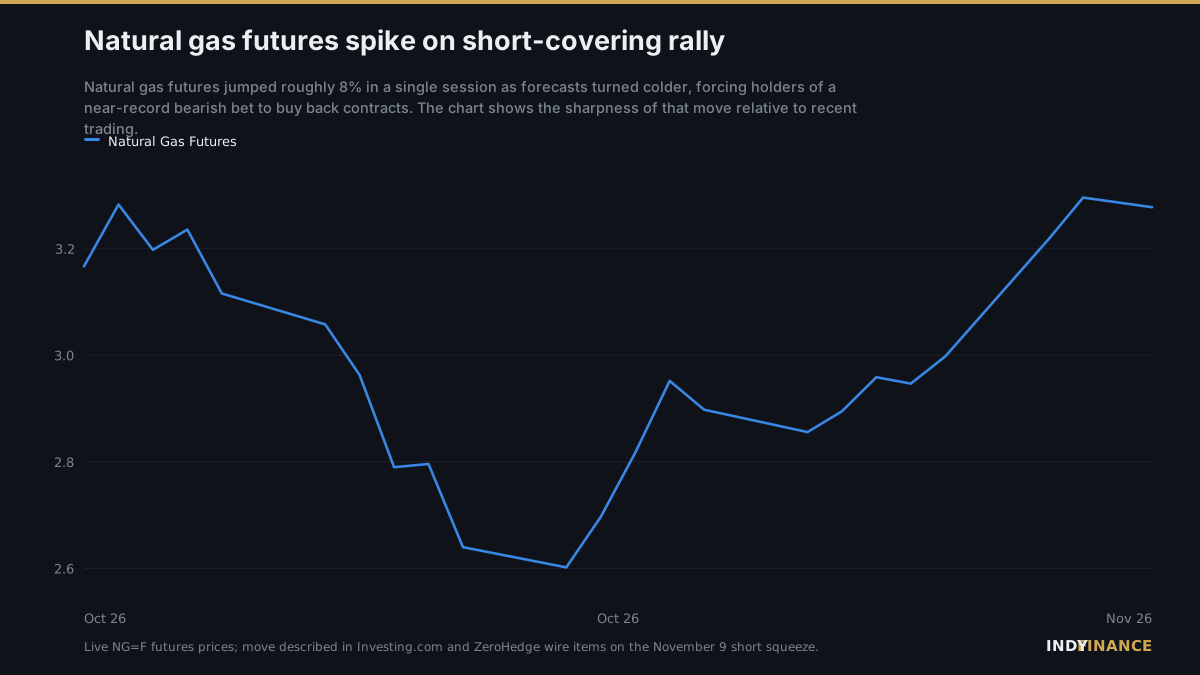
US natural gas futures jumped 8% in the November 9 session, a move traders tied to a short squeeze rather than a sudden change in supply. Hedge funds had built up one of the largest bearish bets on record against the fuel, wagering that mild weather would keep heating demand low through the winter.
That bet came apart once updated forecasts pointed to a colder spell across the US. Traders holding short positions, which profit when prices fall, had to buy contracts to close out those bets as the forecast shifted, and that buying pushed prices higher on top of the demand change itself.
The size of the move is the story here. An 8% single-day jump in a major futures contract is unusual outside of a supply shock, and the gas market had none, no pipeline outage, no export disruption. The distinguishing feature was a hedge fund bear position large enough that unwinding it amplified a weather forecast into a sharp price swing.
What happens next depends on whether the cold blast materializes as forecast and how long it lasts. A brief cold snap that fails to meaningfully dent storage levels would leave the squeeze looking overdone; a sustained cold spell through December would validate the long side and could keep pressure on any remaining shorts.