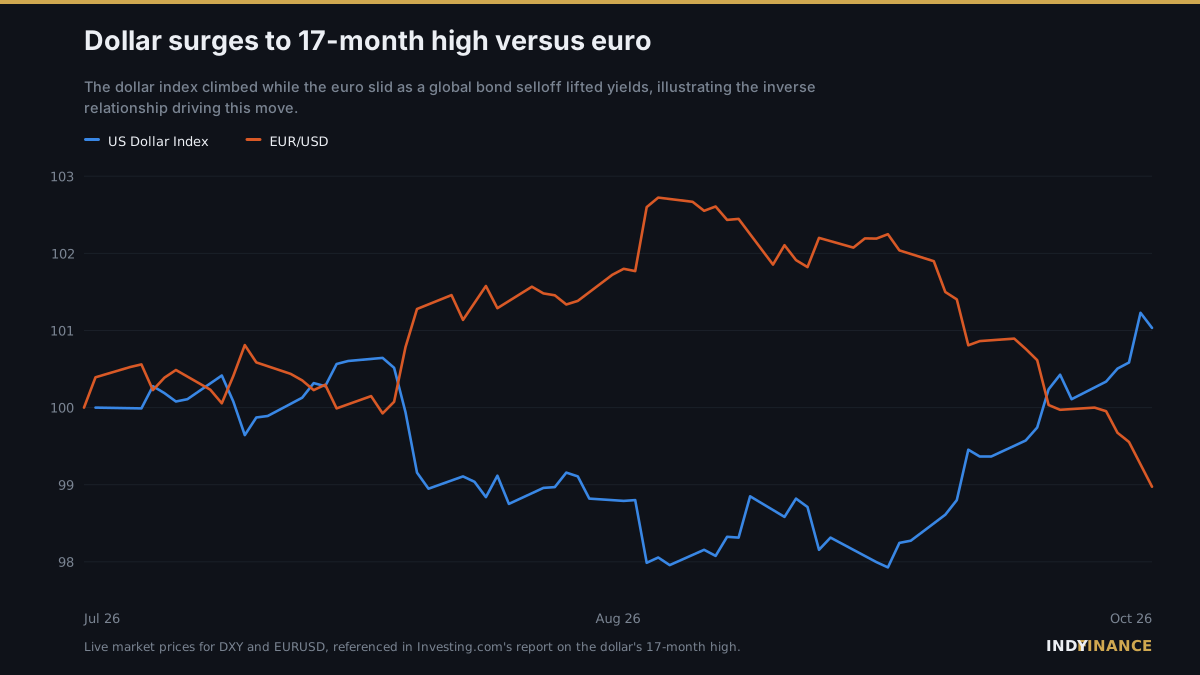
The U.S. dollar reached its highest level in 17 months during the October 1 session, as a selloff in government bonds worldwide pushed yields higher and dragged down the euro. Rising yields typically make dollar-denominated assets more attractive to investors seeking returns, and the scale of the bond rout appears to have been enough to override other crosscurrents in currency markets.
The move matters because a stronger dollar makes U.S. exports pricier abroad and can squeeze emerging-market borrowers who owe debt in dollars. It also comes as separate reports showed consistent upward creep in the 10-year Treasury yield and flagged the note as potentially oversold heading into the September nonfarm payrolls report.
What remains unresolved is whether the bond rout is a temporary repricing or the start of a sustained move. The payrolls data due shortly could either validate higher yields if the labor market proves resilient, or reverse the dollar's gains if the report disappoints.