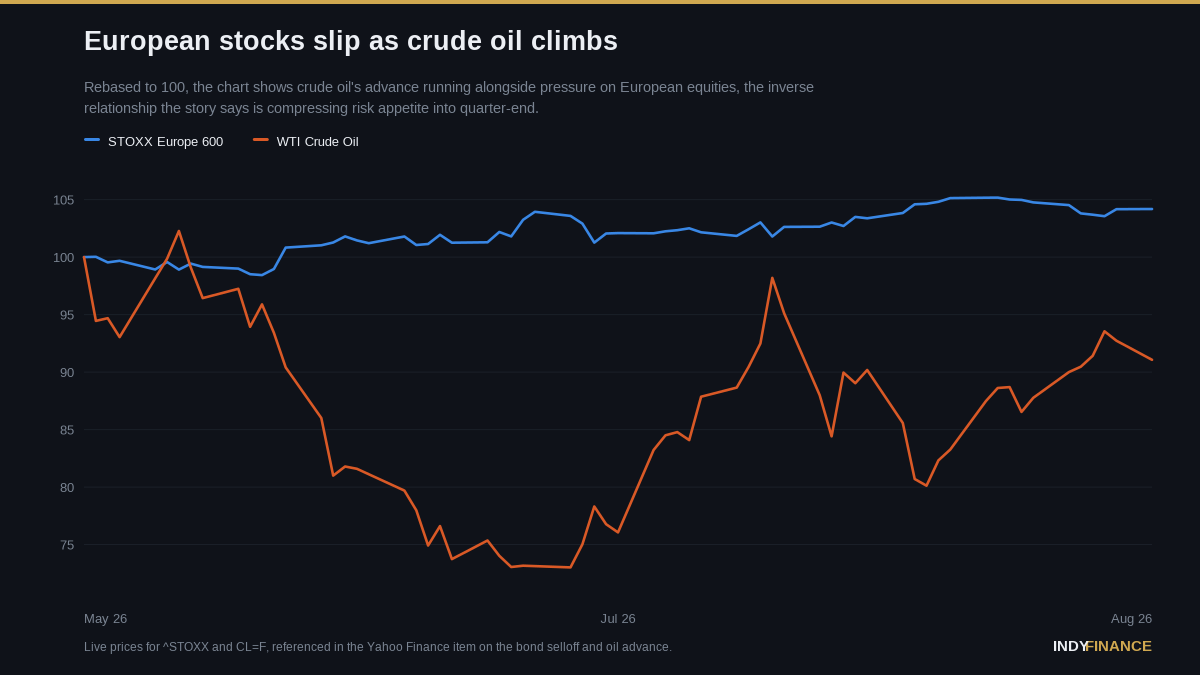
European markets came under pressure as sovereign bond yields backed up across the curve, with the move amplified by a continued advance in crude prices. The combination is the least welcome configuration for risk assets: higher discount rates applied to earnings streams that are simultaneously exposed to rising input and energy costs. For rate-sensitive sectors — utilities, real estate and long-duration growth — the repricing is mechanical, while for European industrials the energy component reintroduces a margin headwind that had largely faded from consensus models.
The transmission to corporate fundamentals is already visible. Lowe's trimmed its outlook as DIY spending lags, a datapoint that speaks directly to the housing-linked consumer and to the lagged effect of elevated mortgage rates on discretionary home investment. The counterpoint came from TJX, which beat on both earnings and revenue — a familiar late-cycle divergence in which off-price and value retail capture trade-down behaviour while big-ticket discretionary stalls. Meanwhile Valero was downgraded to Hold on the view that current crack spreads are unsustainable, a reminder that the energy rally's benefits to refiners may prove transitory even as its costs to the broader economy persist. Positioning into this backdrop warrants defensiveness in duration-sensitive equity and caution on cyclicals levered to the household balance sheet.