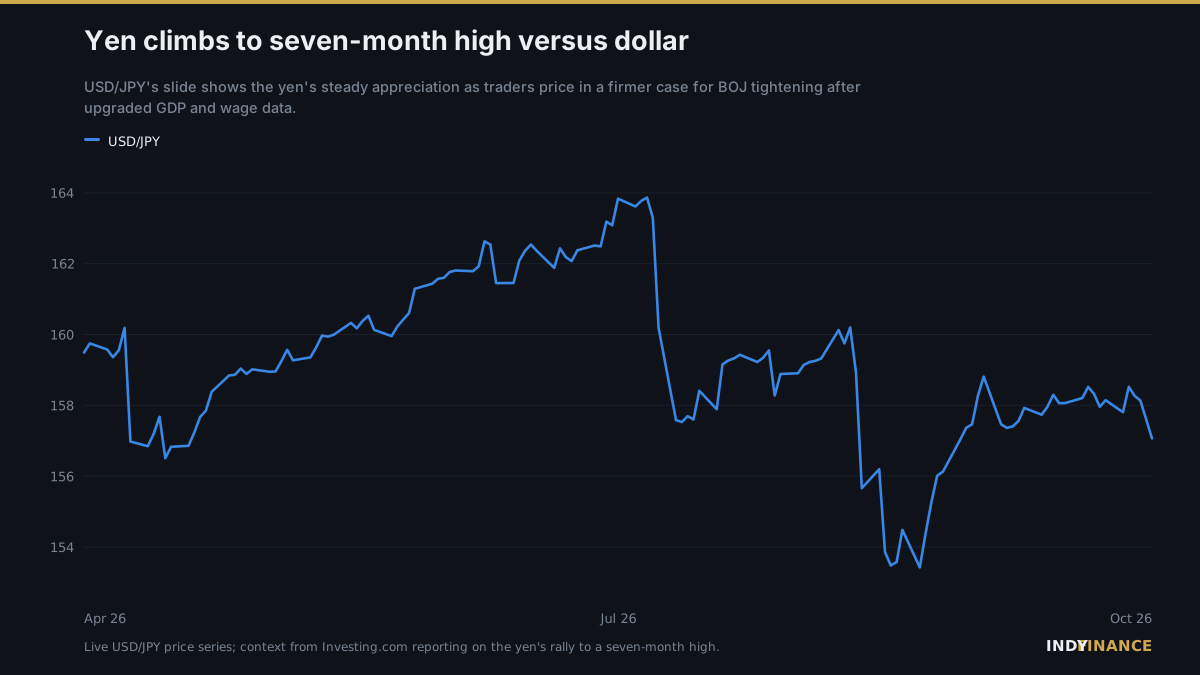
Japan revised its second-quarter gross domestic product figure up to an annualized 1.4% expansion, beating earlier forecasts. Separately, the government reported that real wages rose 2.4% in July, the largest increase since 2021. Both data points strengthen the case for the Bank of Japan to raise interest rates, since sustained wage growth is a condition the central bank has repeatedly said it wants to see before tightening further.
The data helps explain why the yen has extended its rally to a seven-month high against the dollar. Traders read stronger growth and rising real wages as evidence that Japan's economy can withstand higher borrowing costs, making a near-term BOJ hike more plausible and drawing yen buyers.
What remains unresolved is timing. The Bank of Japan has moved cautiously in prior cycles, and neither the GDP revision nor the wage data compels an immediate move; both were released alongside softer signals elsewhere in Asia, including a 5.2% slump in Australian consumer sentiment in September, a reminder that regional strength is uneven.