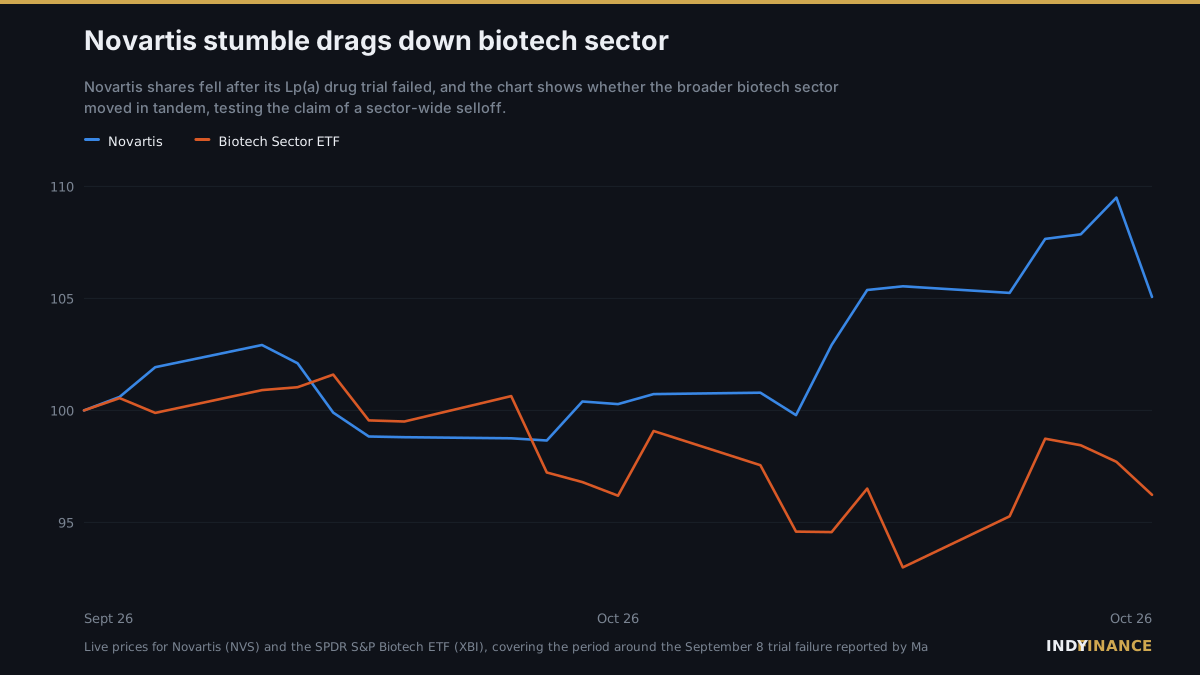
Novartis reported that a late-stage trial for a drug designed to lower Lp(a), a blood fat linked to cardiovascular events, failed to meet its goals. The news, reported September 8, triggered a broad selloff among biopharma companies pursuing the same Lp(a)-lowering strategy, since several drugmakers have bet that cutting Lp(a) levels reduces the risk of fatal heart attacks and strokes.
The selloff matters because it raises doubts about a therapeutic thesis that multiple companies have poured research spending into. If Lp(a) reduction does not translate into fewer cardiovascular events, the entire drug class faces a reset in investor expectations, not just Novartis.
One analysis argued Novartis itself can absorb the setback, framing it as one of two significant pipeline disappointments the company can withstand rather than an existential blow. What remains unresolved is how the rest of the sector, whose valuations partly rest on the same Lp(a) hypothesis, will fare as more trial data comes in.