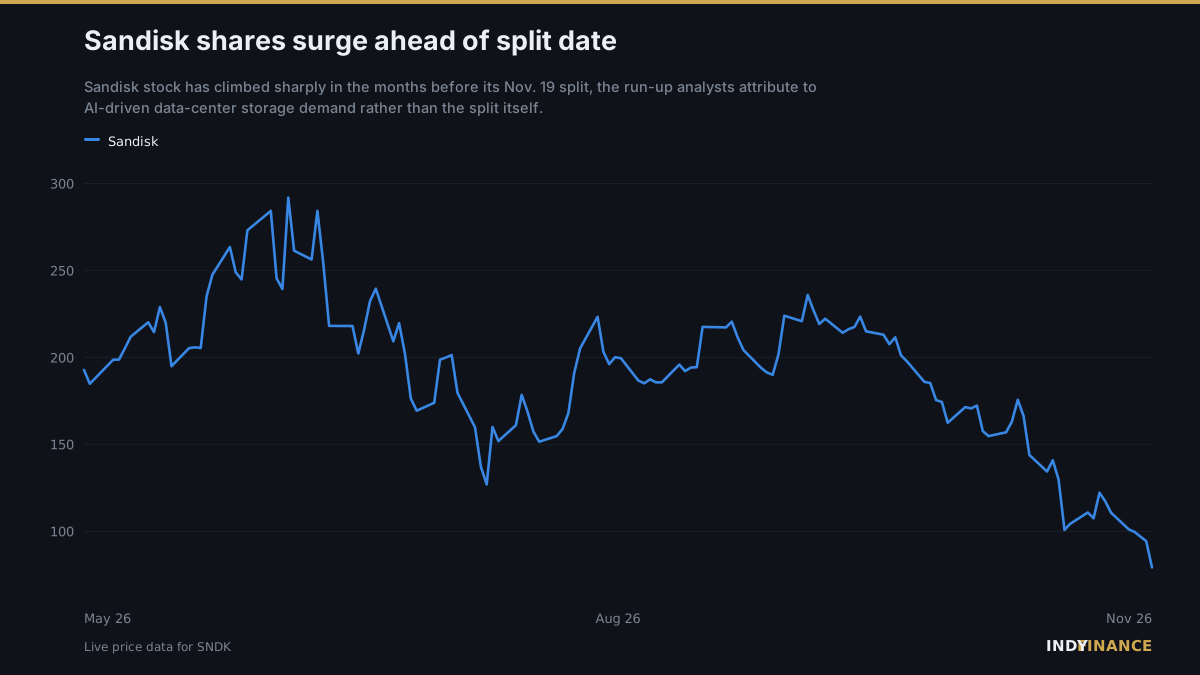
Sandisk's stock split goes into effect on Nov. 19. A split doesn't change a company's value — it just divides existing shares into smaller units — but it often draws in new buyers because a lower per-share price looks more accessible, particularly to retail investors trading in round lots.
The more substantive argument, made separately by analysts covering the stock, is that AI buildout is driving demand for the kind of high-capacity storage Sandisk makes for data centers. That demand case is what's supposed to carry the stock past the initial split-driven interest, rather than the split being the catalyst on its own.
The two threads point in the same direction but rest on different mechanisms: one is a liquidity and optics event with a fixed date, the other is a demand thesis tied to how much storage capacity AI infrastructure actually needs. Whether the rally holds past the split date depends on the second thread, not the first.