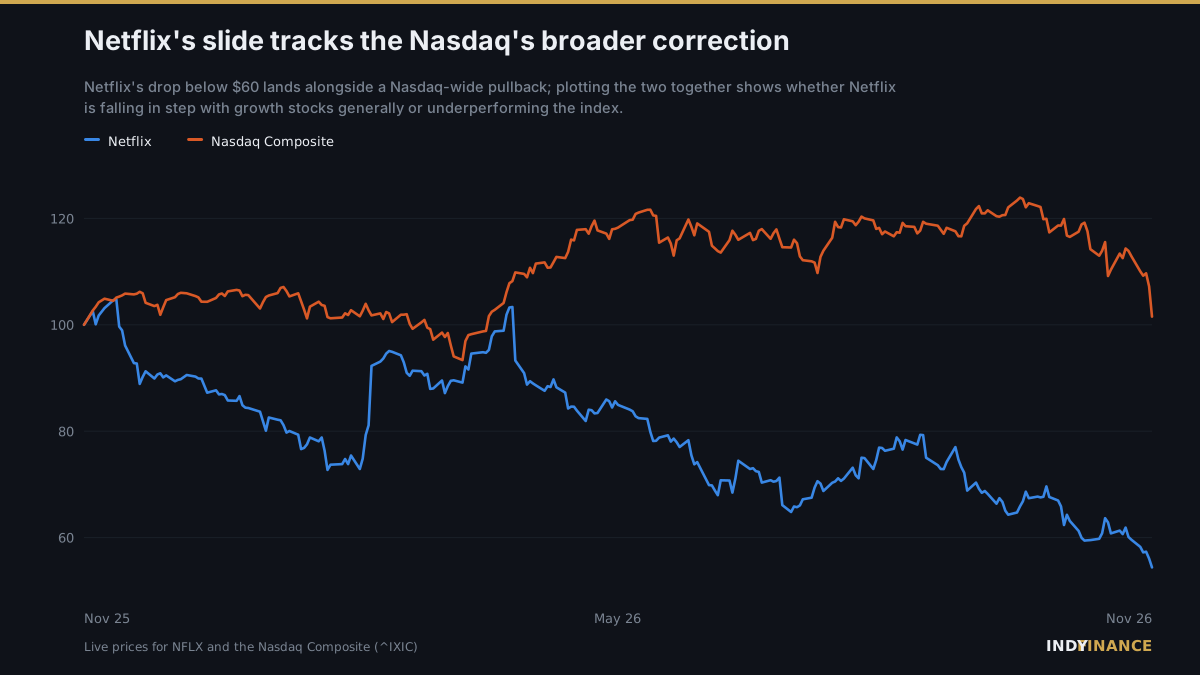
Netflix shares closed below $60 for the first time since August 2024. The level is notable less for the round number than for what it signals: a stock that has given back roughly a year and a half of gains in a market that is reassessing growth names broadly, not just Netflix specifically.
The drop landed in the same window as a Nasdaq correction, with traders now pricing in a December Federal Reserve rate hike rather than a cut. Higher expected rates compress the valuations investors are willing to pay for future earnings, which hits richly priced growth and tech stocks hardest, Netflix included.
That combination, a specific company threshold and an index-wide repricing, is more informative together than either fact alone. It suggests Netflix's decline is not isolated to a subscriber or content problem but is being amplified by the same rate repricing hitting other high-multiple names.
What's unresolved is whether the Fed actually delivers a December hike or whether the current pricing proves premature, a question that will move Netflix and its growth-stock peers together regardless of anything Netflix itself does operationally.