US Strikes on Iran Send Oil Above $94, Dow Drops 400 Points
Refiners and tanker operators rallied on the Hormuz threat while the IAEA said it could not confirm the status of Iran's nuclear program.
The Dow fell about 400 points on September 1 after U.S. strikes on Iran pushed oil prices above $94 a barrel and raised fears of a Strait of Hormuz disruption.
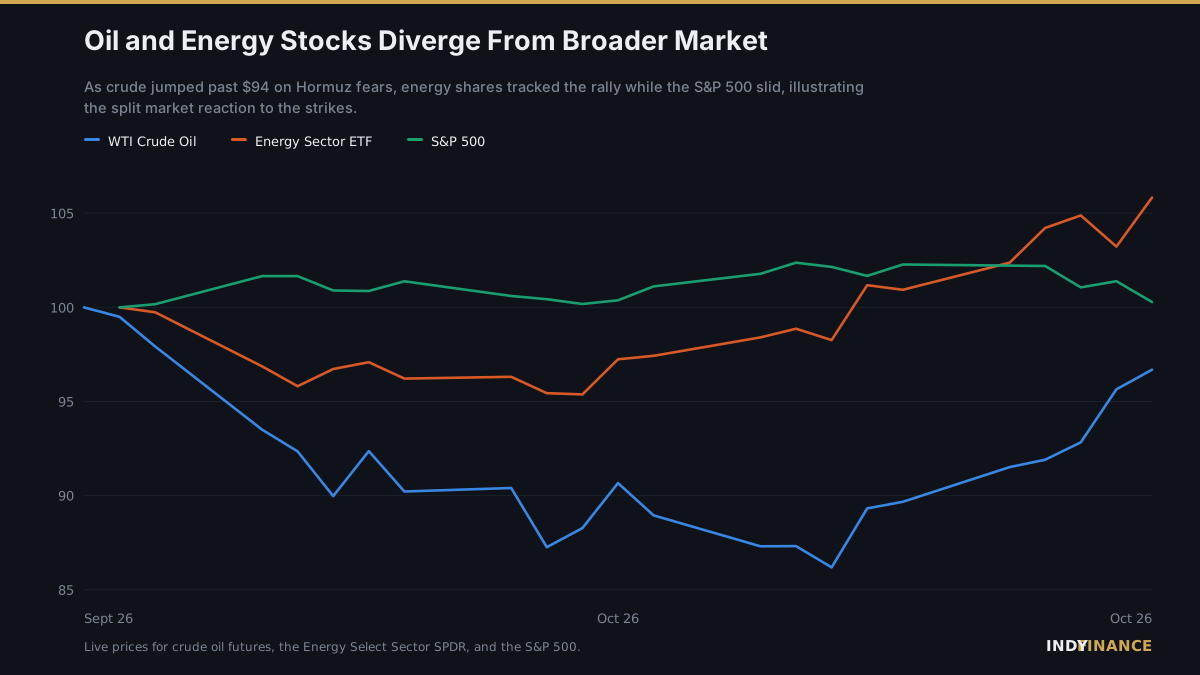
Oil and Energy Stocks Diverge From Broader Market
As crude jumped past $94 on Hormuz fears, energy shares tracked the rally while the S&P 500 slid, illustrating the split market reaction to the strikes.
Live prices for crude oil futures, the Energy Select Sector SPDR, and the S&P 500.
Use this chart
Free to embed with attribution:
<figure><a href="https://www.indy.finance/news/us-strikes-on-iran-send-oil-above-94-dow-drops-400-points"><img src="https://www.indy.finance/news/us-strikes-on-iran-send-oil-above-94-dow-drops-400-points/graphic.svg" alt="Oil and Energy Stocks Diverge From Broader Market" width="1200" height="675"></a><figcaption>Oil and Energy Stocks Diverge From Broader Market — <a href="https://www.indy.finance/news/us-strikes-on-iran-send-oil-above-94-dow-drops-400-points">Indy Finance</a></figcaption></figure>If Iran does not move to restrict shipping through the Strait of Hormuz in the days following the September 1 strikes, the oil-price and tanker-rally premium built into markets that day would likely unwind.
- Yahoo Finance — NewsDow falls 400 points after U.S. strikes Iran, oil surgesExternal ↗
- Investing.com — All NewsIAEA says status of Iran nuclear programs unknownExternal ↗
- Yahoo Finance — NewsOil prices surge above $94 after U.S. strikes Iran in HormuzExternal ↗
- Seeking Alpha — All ArticlesHormuz Escalation Pays Refiners And Tankers AgainExternal ↗
Produced automatically by the INDY NEWS Desk from the public wire sources cited above, and checked against them before publication. Market commentary, not investment advice.