Junk Bond Spreads Hit Post-Tariff-Shock Highs as Treasury Yields Rise
The riskiest US corporate borrowers are paying the steepest premium over safe debt since last year's tariff-driven market meltdown.
Spreads on the lowest-rated US junk debt have climbed to their highest level since the sell-off that followed last year's tariff announcement, according to the Financial Times.
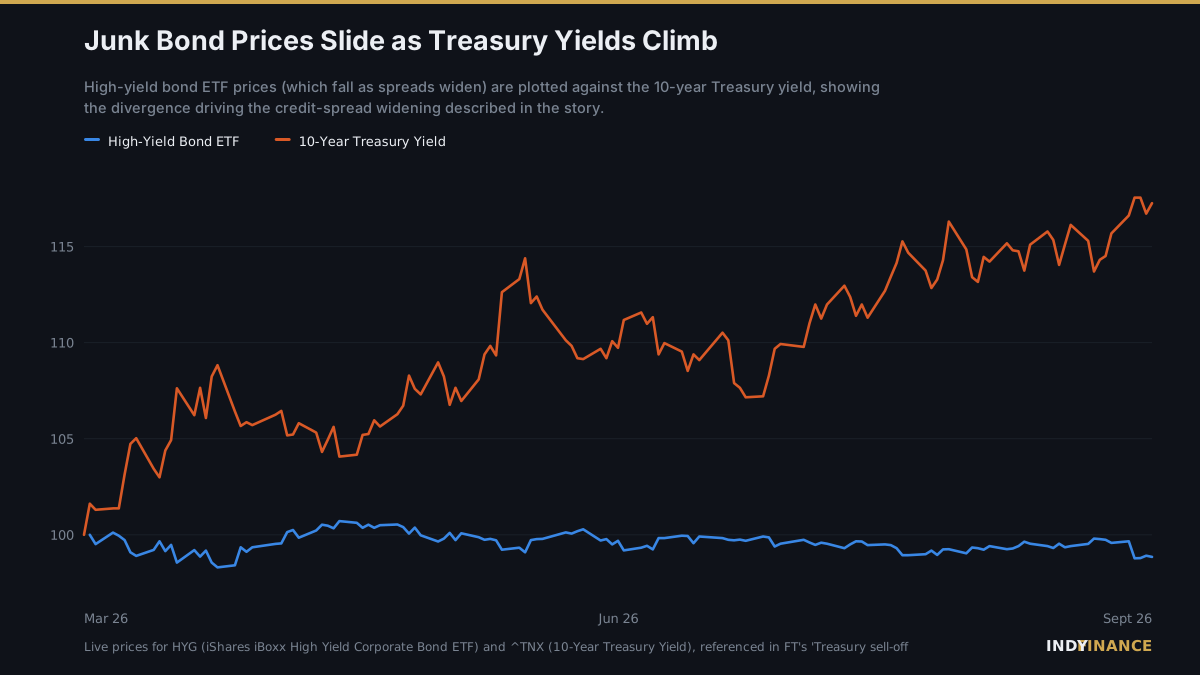
Junk Bond Prices Slide as Treasury Yields Climb
High-yield bond ETF prices (which fall as spreads widen) are plotted against the 10-year Treasury yield, showing the divergence driving the credit-spread widening described in the story.
Live prices for HYG (iShares iBoxx High Yield Corporate Bond ETF) and ^TNX (10-Year Treasury Yield), referenced in FT's 'Treasury sell-off piles pressure on weakest US borrowers'
Use this chart
Free to embed with attribution:
<figure><a href="https://www.indy.finance/news/junk-bond-spreads-hit-post-tariff-shock-highs-as-treasury-yields-rise"><img src="https://www.indy.finance/news/junk-bond-spreads-hit-post-tariff-shock-highs-as-treasury-yields-rise/graphic.svg" alt="Junk Bond Prices Slide as Treasury Yields Climb" width="1200" height="675"></a><figcaption>Junk Bond Prices Slide as Treasury Yields Climb — <a href="https://www.indy.finance/news/junk-bond-spreads-hit-post-tariff-shock-highs-as-treasury-yields-rise">Indy Finance</a></figcaption></figure>If junk-bond spreads narrow back toward pre-selloff levels over the coming weeks without a fresh wave of downgrades or defaults, this would suggest the move was a temporary Treasury-driven repricing rather than a durable credit-tightening trend.
- Investing.com — All NewsWhen do higher bond yields become a bigger problem for stocks?External ↗
- Financial Times — Home (International)Treasury sell-off piles pressure on weakest US borrowersExternal ↗
Produced automatically by the INDY NEWS Desk from the public wire sources cited above, and checked against them before publication. Market commentary, not investment advice.