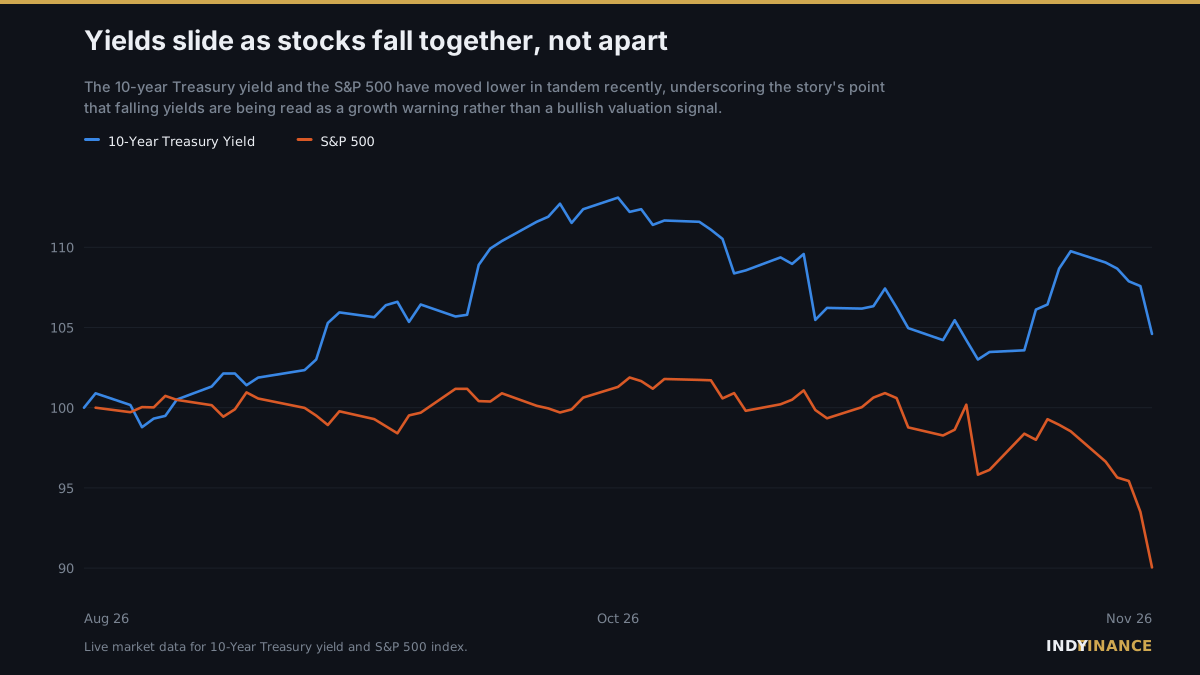
Treasury Secretary Bessent is advocating for a lower Federal Reserve rate hike, pointing to an energy shock as his justification. The comments land alongside a bond market move in the same direction: yields are falling, a pattern bond investors typically read as a signal of disinflation risk ahead, even as equities extend a losing streak.
The connection matters because Bessent's argument and the bond market's own signal are reinforcing each other without necessarily agreeing on the cause. Bessent is citing energy prices as a shock that could justify a softer rate path. The bond market's falling yields suggest investors are pricing in slower growth or lower inflation more broadly, not just an energy-specific effect.
For equity investors, the read-through is mixed rather than clearly bullish or bearish. Lower rates would typically support stock valuations, but the equity losing streak accompanying the yield decline suggests the market is currently treating falling yields as a signal of growth concern rather than relief.
What is unresolved is whether the Fed will act on Bessent's framing. His role as Treasury Secretary gives him no formal vote on the Fed's decision, and the specific scale of the energy shock he is citing was not detailed in the available reporting.