Oil traders lose their playbook as Iran conflict scrambles supply routes
JPMorgan says it has no clear endgame for the market as Saudi Arabia reroutes exports through the Strait of Hormuz after its East-West pipeline shut down.
JPMorgan has abandoned its baseline view on oil markets as the Iran conflict continues, while Saudi Arabia pushes more crude through the Strait of Hormuz because its East-West pipeline is offline.
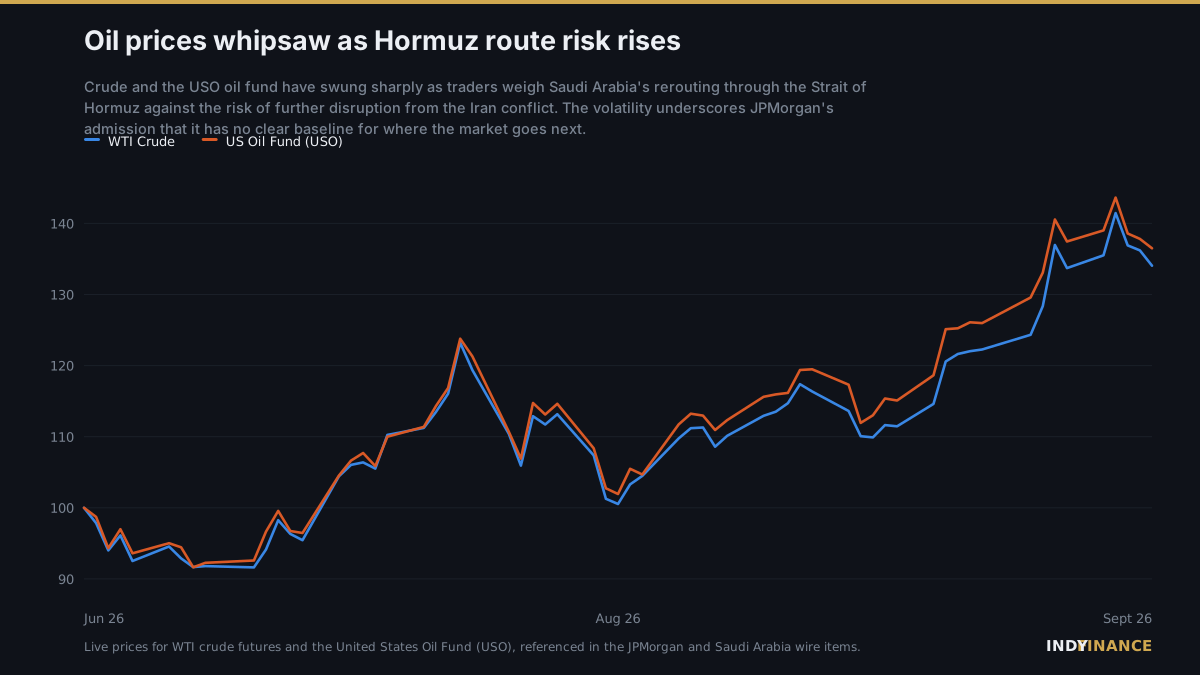
Oil prices whipsaw as Hormuz route risk rises
Crude and the USO oil fund have swung sharply as traders weigh Saudi Arabia's rerouting through the Strait of Hormuz against the risk of further disruption from the Iran conflict. The volatility underscores JPMorgan's admission that it has no clear baseline for where the market goes next.
Live prices for WTI crude futures and the United States Oil Fund (USO), referenced in the JPMorgan and Saudi Arabia wire items.
Use this chart
Free to embed with attribution:
<figure><a href="https://www.indy.finance/news/oil-traders-lose-their-playbook-as-iran-conflict-scrambles-supply-routes"><img src="https://www.indy.finance/news/oil-traders-lose-their-playbook-as-iran-conflict-scrambles-supply-routes/graphic.svg" alt="Oil prices whipsaw as Hormuz route risk rises" width="1200" height="675"></a><figcaption>Oil prices whipsaw as Hormuz route risk rises — <a href="https://www.indy.finance/news/oil-traders-lose-their-playbook-as-iran-conflict-scrambles-supply-routes">Indy Finance</a></figcaption></figure>If Saudi Arabia's East-West pipeline resumes normal operation or Strait of Hormuz shipping volumes are disrupted by a direct incident, JPMorgan's 'no endgame' framing would need to be revisited.
- Investing.com — All NewsHRT Financial LP sells $2.6m of United States Oil Fund shortExternal ↗
- Seeking Alpha — All ArticlesThe Global Fuel Crisis Has Arrived: Why 3 Refiners Could Be The Biggest WinnersExternal ↗
- Investing.com — All NewsJP Morgan says it has no clear oil market endgame as Iran conflict drags onExternal ↗
- Investing.com — All NewsJPMorgan loses baseline view on oil markets amid Iran conflictExternal ↗
- MarketWatch — Top StoriesSaudi Arabia is now pushing to export more oil through the Strait of HormuzExternal ↗
Produced automatically by the INDY NEWS Desk from the public wire sources cited above, and checked against them before publication. Market commentary, not investment advice.