Refiners, Not Crude Supply, Are Now the Bottleneck in Global Energy
Processing capacity, not oil in the ground, is emerging as the constraint on how much fuel reaches the market.
Refining capacity has become the binding constraint on global energy supply even as crude output holds up.
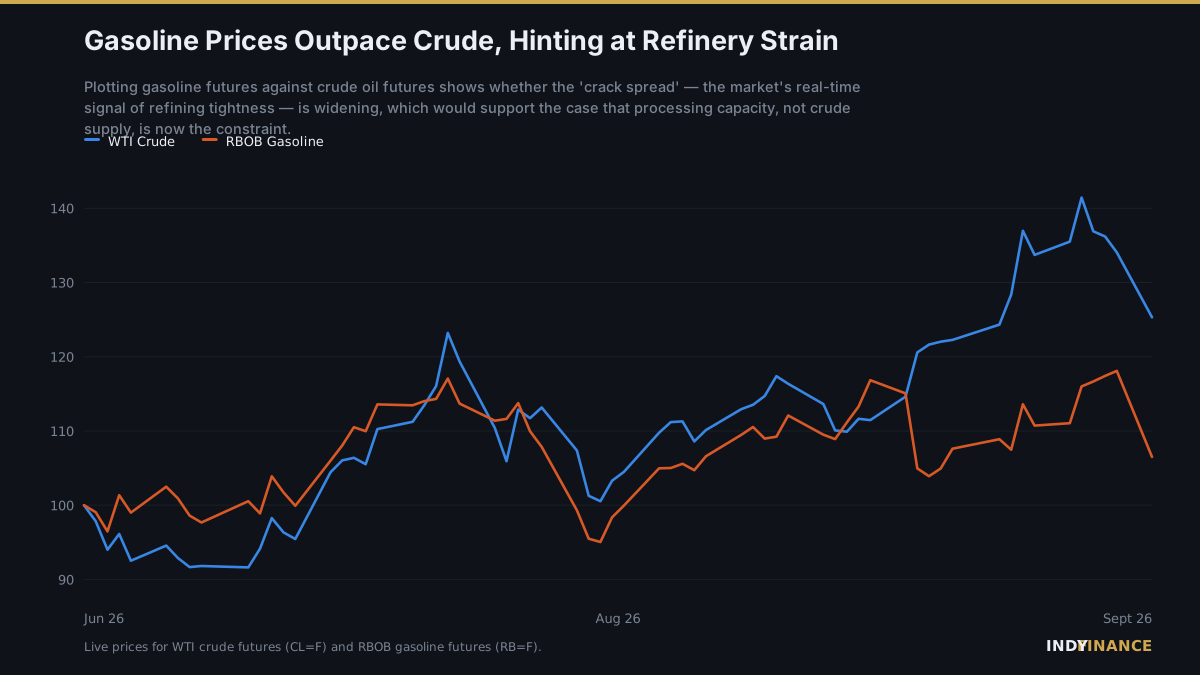
Gasoline Prices Outpace Crude, Hinting at Refinery Strain
Plotting gasoline futures against crude oil futures shows whether the 'crack spread' — the market's real-time signal of refining tightness — is widening, which would support the case that processing capacity, not crude supply, is now the constraint.
Live prices for WTI crude futures (CL=F) and RBOB gasoline futures (RB=F).
Use this chart
Free to embed with attribution:
<figure><a href="https://www.indy.finance/news/refiners-not-crude-supply-are-now-the-bottleneck-in-global-energy"><img src="https://www.indy.finance/news/refiners-not-crude-supply-are-now-the-bottleneck-in-global-energy/graphic.svg" alt="Gasoline Prices Outpace Crude, Hinting at Refinery Strain" width="1200" height="675"></a><figcaption>Gasoline Prices Outpace Crude, Hinting at Refinery Strain — <a href="https://www.indy.finance/news/refiners-not-crude-supply-are-now-the-bottleneck-in-global-energy">Indy Finance</a></figcaption></figure>If global refining utilization rates rise significantly and fuel price spreads narrow over the next several months, the chokepoint framing would weaken.
- Yahoo Finance — NewsFossil fuel emissions set to fall in after oil shockExternal ↗
- Yahoo Finance — NewsRefineries Are Now the Main Chokepoint for Global Energy SuppliesExternal ↗
Produced automatically by the INDY NEWS Desk from the public wire sources cited above, and checked against them before publication. Market commentary, not investment advice.