US Strikes on Iranian Launchers Send Oil Higher, Asian Stocks Lower
Attacks on Larak Island targets pushed crude up and rattled Asian equity markets, while U.S. futures pointed to a weaker open.
Oil prices rose after U.S. forces struck Iranian missile launchers on Larak Island, while Asian shares fell and U.S. stock futures dipped on renewed fears of a wider Middle East conflict.
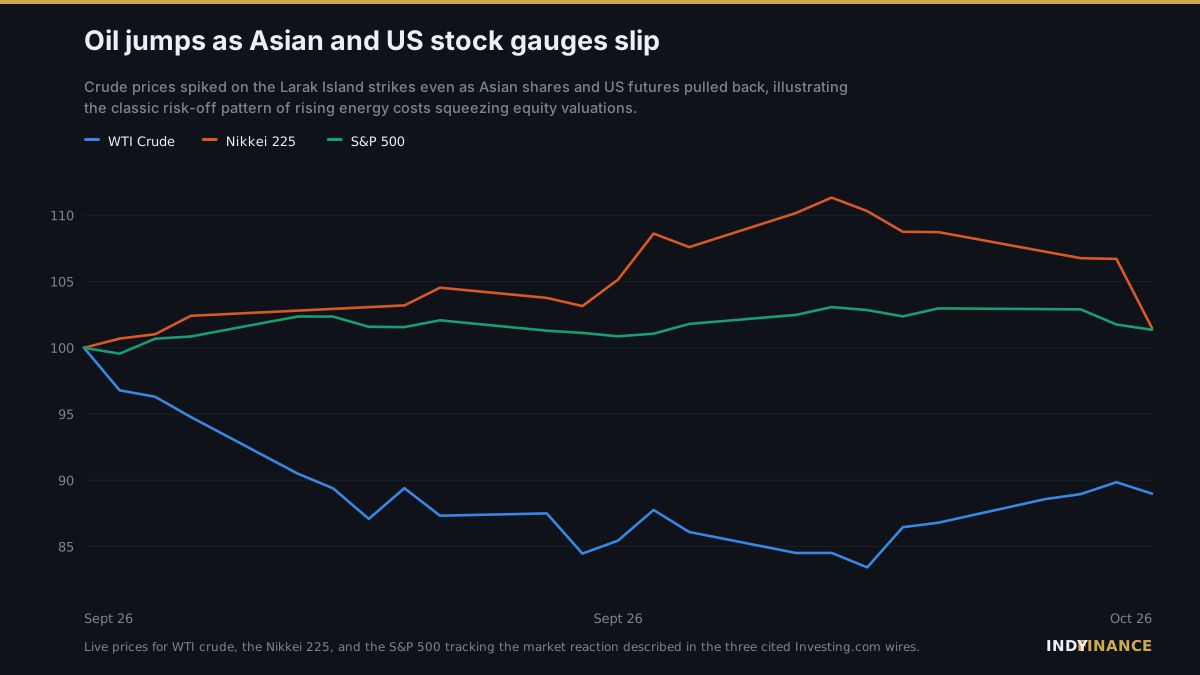
Oil jumps as Asian and US stock gauges slip
Crude prices spiked on the Larak Island strikes even as Asian shares and US futures pulled back, illustrating the classic risk-off pattern of rising energy costs squeezing equity valuations.
Live prices for WTI crude, the Nikkei 225, and the S&P 500 tracking the market reaction described in the three cited Investing.com wires.
Use this chart
Free to embed with attribution:
<figure><a href="https://www.indy.finance/news/us-strikes-on-iranian-launchers-send-oil-higher-asian-stocks-lower"><img src="https://www.indy.finance/news/us-strikes-on-iranian-launchers-send-oil-higher-asian-stocks-lower/graphic.svg" alt="Oil jumps as Asian and US stock gauges slip" width="1200" height="675"></a><figcaption>Oil jumps as Asian and US stock gauges slip — <a href="https://www.indy.finance/news/us-strikes-on-iranian-launchers-send-oil-higher-asian-stocks-lower">Indy Finance</a></figcaption></figure>This framing weakens if Iran does not retaliate and oil prices give back their post-strike gains within the next few sessions, or if a ceasefire halts further U.S. action against Iranian targets.
- Investing.com — All NewsOil prices climb after U.S. strikes Iranian launchers on Larak IslandExternal ↗
- Investing.com — All NewsShares skid in Asia as oil, yields stay highExternal ↗
- Investing.com — All NewsU.S. stock futures dip amid renewed Iran hostilitiesExternal ↗
Produced automatically by the INDY NEWS Desk from the public wire sources cited above, and checked against them before publication. Market commentary, not investment advice.