Oil and Gas Jump, European Stocks Hit One-Month Low as US-Iran Clash Resumes
Renewed US-Iran hostilities pushed European gas prices to their highest level this year and dragged the FTSE 100 and broader European indexes lower on September 2.
European shares were pinned at a one-month low on September 2 as the resumption of US-Iran hostilities lifted oil and gas prices and pushed government bond yields toward 5%.
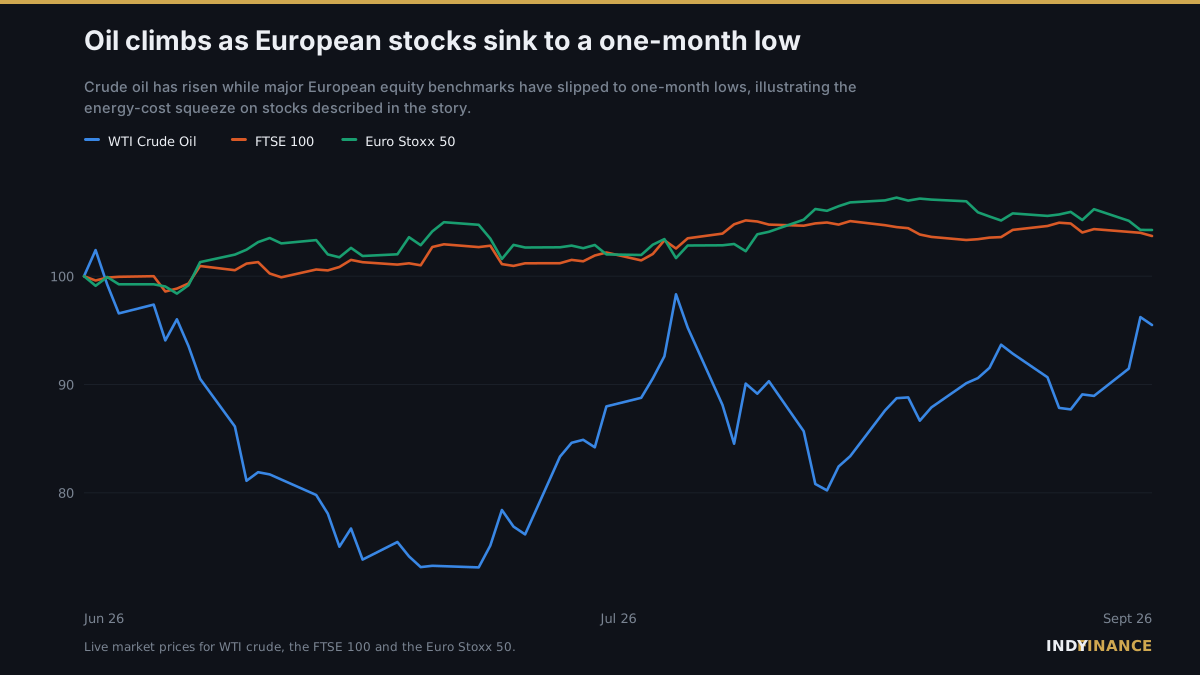
Oil climbs as European stocks sink to a one-month low
Crude oil has risen while major European equity benchmarks have slipped to one-month lows, illustrating the energy-cost squeeze on stocks described in the story.
Live market prices for WTI crude, the FTSE 100 and the Euro Stoxx 50.
Use this chart
Free to embed with attribution:
<figure><a href="https://www.indy.finance/news/oil-and-gas-jump-european-stocks-hit-one-month-low-as-us-iran-clash-resumes"><img src="https://www.indy.finance/news/oil-and-gas-jump-european-stocks-hit-one-month-low-as-us-iran-clash-resumes/graphic.svg" alt="Oil climbs as European stocks sink to a one-month low" width="1200" height="675"></a><figcaption>Oil climbs as European stocks sink to a one-month low — <a href="https://www.indy.finance/news/oil-and-gas-jump-european-stocks-hit-one-month-low-as-us-iran-clash-resumes">Indy Finance</a></figcaption></figure>If the US and Iran reach a ceasefire or de-escalation in the coming days that reverses the recent oil price rise, the bearish framing for European equities would no longer hold.
- Investing.com — All NewsEuropean shares holds at 1-month lows on global yield surge squeezeExternal ↗
- Investing.com — All NewsFTSE 100 today: Stocks slip as Iran-U.S. strikes drive oil higherExternal ↗
- Investing.com — All NewsEuropean shares pinned at one-month low as flaring Mideast tensions lift bond yieldsExternal ↗
- Investing.com — All NewsIran, Fed data and 5% yields: - what’s moving marketsExternal ↗
- Financial Times — Home (International)European gas prices hit highest this year and oil risesExternal ↗
Produced automatically by the INDY NEWS Desk from the public wire sources cited above, and checked against them before publication. Market commentary, not investment advice.