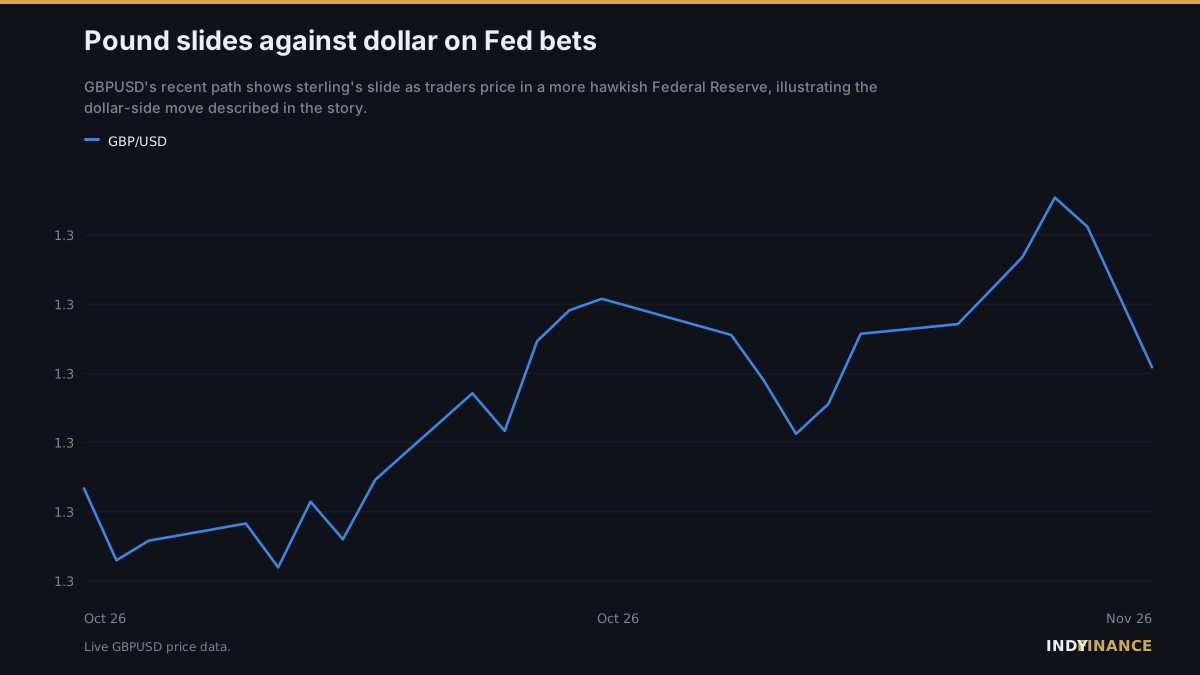
The pound slipped against the dollar in the September 23 session, according to Investing.com, as dollar strength built on growing bets that the Federal Reserve will hold a hawkish policy stance. The move was driven from the U.S. side of the pair rather than any fresh U.K. economic release.
The dollar's resilience has been a recurring theme this year, and Tuesday's session added to it: currency traders appear to be recalibrating how quickly, or slowly, the Fed will cut rates. A hawkish repricing tends to lift Treasury yields and pull capital toward the dollar, which weighs on rival currencies like sterling even when nothing changes domestically in the U.K.
What remains unresolved is how durable this hawkish repricing proves to be. Separately, a Nomura note flagged that Fed Governor Kevin Warsh's newly proposed inflation-tracking method does not show better predictive power than standard core inflation readings, a detail that could complicate the case for or against a hawkish Fed stance if it gains traction in policy debate.