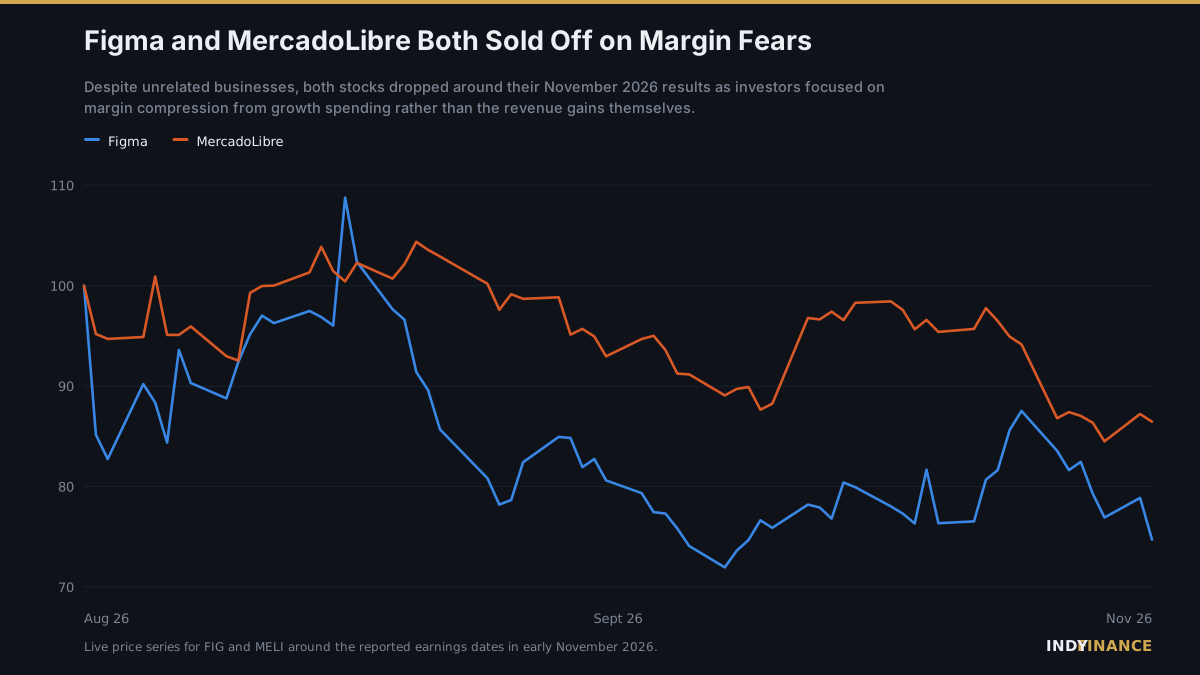
Two very different companies ran into the same problem in results covered around November 4, 2026. Figma's stock fell as investors worried that its AI models and agents, while driving usage, cost more to deliver than the revenue they are generating today, according to MarketWatch. MercadoLibre's third-quarter growth slowed as margins shrank, with The Motley Fool tying the compression directly to the company's push into cheaper shipping and credit cards.
The mechanism is the same even though the businesses are not: both companies are choosing to spend now, on infrastructure or on subsidized services, to build a position they believe will pay off later. In both cases, the near-term accounting shows up as rising costs without matching revenue, and the market reacted by selling the stock rather than crediting the growth.
This is the same pattern the desk has tracked all week with earnings beats that still produced selloffs, but the mechanism here is more specific than a revenue miss: it is a visible, named tradeoff between near-term margin and a longer-term strategic bet, which is harder for investors to price than a simple beat-or-miss.
What is unresolved for both companies is the payback period. Neither report quantifies when AI delivery costs at Figma or shipping and credit investments at MercadoLibre are expected to turn margin-accretive, which leaves investors guessing at the return on money being spent right now.