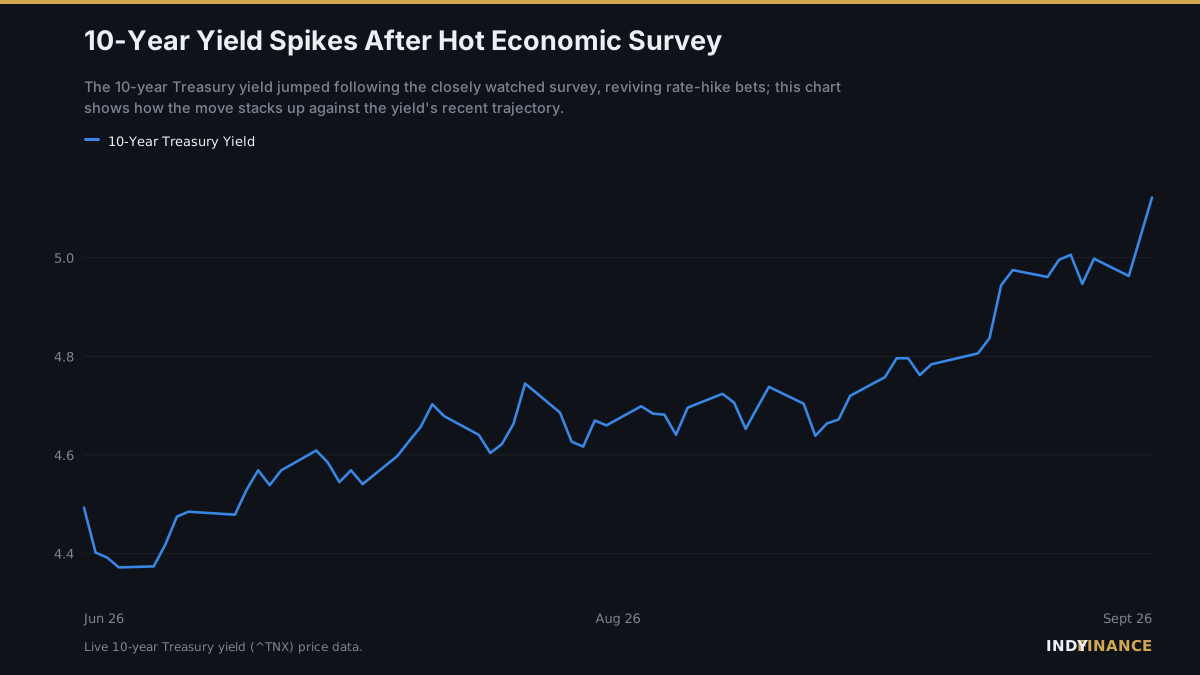
US Treasury yields climbed in the September 23 session after a closely followed economic survey pointed to overheating in parts of the world's largest economy, according to the Financial Times. The move revived bets among traders that the Federal Reserve could tighten policy further rather than ease it, a reversal of the rate-cut expectations that had underpinned much of this year's stock market gains.
Higher Treasury yields matter well beyond the bond market. They raise the cost of capital for companies, make bonds more competitive with stocks, and often pressure rate-sensitive sectors like real estate and utilities. The 10-year yield in particular serves as a benchmark for mortgage rates and corporate borrowing costs across the economy.
What remains unresolved is whether this data point is a one-off or the start of a trend. The Fed's next policy meeting and subsequent inflation and employment reports will determine whether Wednesday's yield move was a temporary repricing or the beginning of a sustained shift in rate expectations.