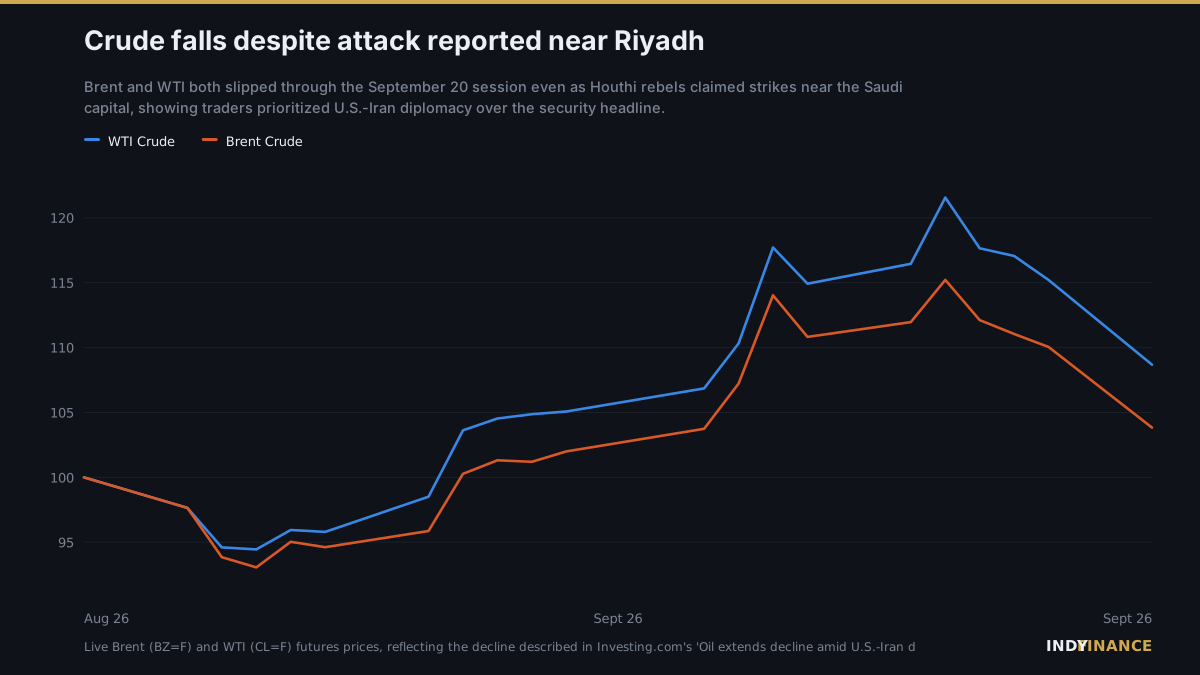
Oil prices extended a decline in the September 20 session, with traders weighing hopes for U.S.-Iran diplomatic progress against reports of flames and smoke near Riyadh's airport after Houthi rebels claimed attacks on the Saudi capital. The diplomacy narrative won out, pushing crude lower even as a major Gulf oil producer faced a direct security threat.
The session also brought a separate but related diplomatic thread: the U.S. and China agreed to open a dialogue on artificial intelligence ahead of a planned Trump-Xi meeting, following a New York meeting between Treasury Secretary Scott Bessent and his Chinese counterpart, He Lifeng. Asian equity markets read the combination of easing Iran tensions and U.S.-China engagement as a positive, with tech shares leading gains and oil easing further in Asian trade.
What is unresolved is whether the Riyadh attack causes any actual disruption to Saudi oil infrastructure or exports; so far, markets have treated it as a headline risk rather than a supply threat. A confirmed strike on production or export facilities would force a rapid repricing of that assumption.